
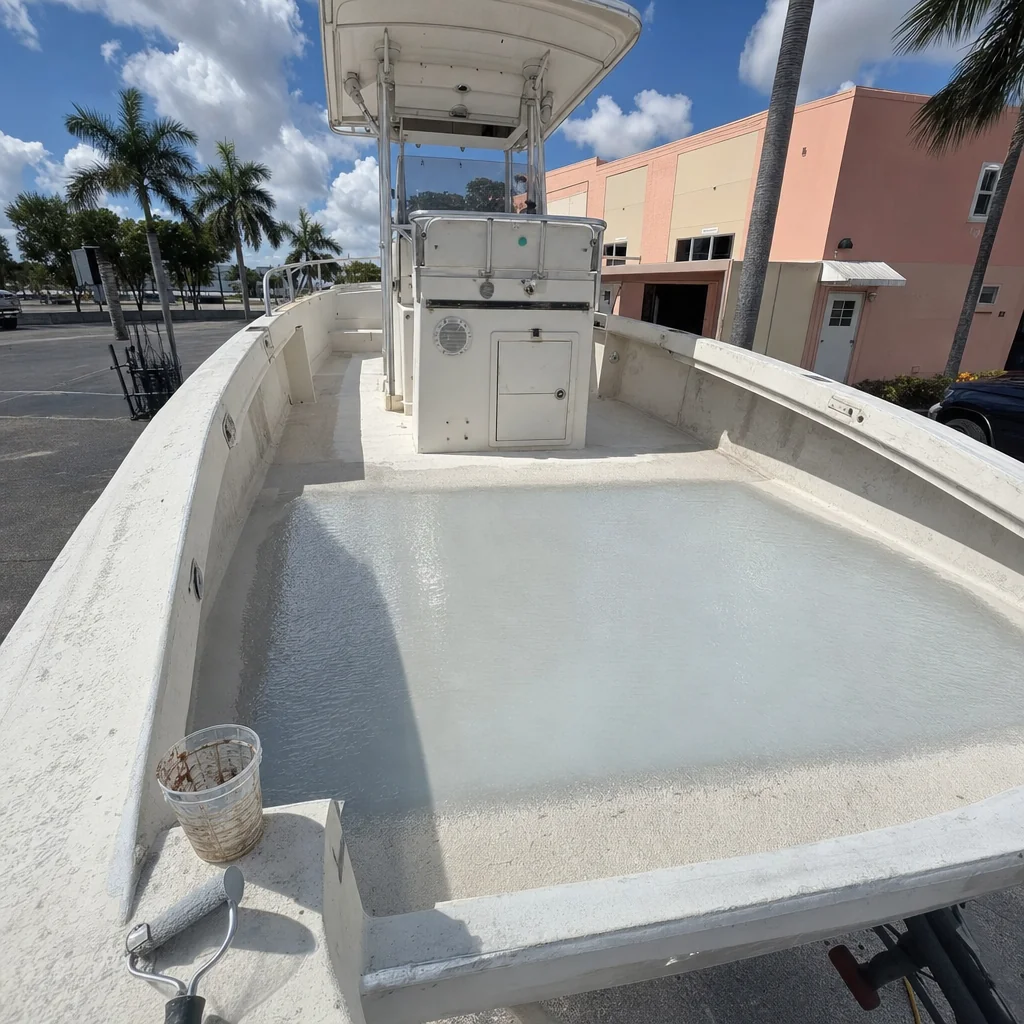
Transom Repair Miami, FL
A soft, rotted, or cracked transom is one of the most serious structural problems a fiberglass boat can develop, and transom repair should never be postponed once the damage is confirmed. Left alone, water intrusion spreads from the transom core into the surrounding hull, turning a manageable fix into a full rebuild. Our mobile crew comes to your marina or driveway anywhere in Miami and handles the job on-site, so your boat stays out of a crowded boatyard. Learn more about Fiberglass Boat Repair.

Why the Transom Is the First Place Water Wins
The transom bears the full weight and vibration of your outboard engine, which means the hardware penetrations — motor bolts, steering cables, fuel lines — are constantly working against the sealant that keeps water out. Miami's heat accelerates that breakdown, and once moisture reaches the plywood or foam core sandwiched between the fiberglass skins, rot sets in fast. A transom that flexes noticeably when you push on it, sounds hollow when tapped, or shows stress cracks radiating from the engine mount area has almost certainly taken on water. Catching it at this stage saves the stringers, the bilge, and your engine mounting surface.
How We Approach a Transom Repair in Miami
Every repair starts with a moisture meter reading and a tap test across the full transom face so we know exactly how far the damage extends before we cut anything. If the outer fiberglass skin is still sound, we can sometimes access the core through the engine-mount holes, dry the cavity, and inject a structural epoxy filler — a far less invasive process than a full replacement. When the skin itself is delaminated or the core is completely saturated, we grind back to solid material, remove the compromised core, and laminate in new marine-grade plywood or a composite alternative sealed on all six sides before the outer skin goes back on.
After the structural work is done, we rebuild the engine-mounting surface to factory thickness, re-drill and re-seal every hardware penetration, and apply a gelcoat finish matched to your hull color. The result is a transom that is structurally stronger than the original because modern epoxy laminates outperform the polyester systems used in most production boats.
- Moisture meter and tap-test assessment before any cutting
- Epoxy injection for early-stage delamination when the skin is intact
- Full core replacement with sealed marine-grade plywood or composite board
- Engine-mount surface rebuilt to OEM thickness specifications
- All hardware penetrations re-drilled, bedded, and sealed
- Gelcoat color-matched to the existing hull
Signs Your Transom Needs Attention Now
Any one of these symptoms warrants a professional inspection before your next time on the water.
Flex Under Load:
If the transom visibly moves or feels spongy when you push against the engine, the core has lost its structural integrity and the motor mount is no longer secure.
Hollow Tap Sound:
A firm knock that returns a dull, hollow tone instead of a solid thud indicates delamination between the fiberglass skin and the core beneath it.
Stress Cracks at Engine Bolts:
Spider cracks or elongated fractures radiating from motor-mount hardware are a sign the transom is flexing far beyond its design limits.
Water in the Bilge After Rain:
Unexplained bilge water that appears without the boat being in the water often traces back to transom penetrations that have lost their seal.
Blistering or Soft Gelcoat:
Surface blisters or a gelcoat that gives slightly under thumb pressure on the transom face usually means moisture has already reached the laminate.
Engine Alignment Issues:
If your outboard tilts or sits unevenly on the transom bracket, the mounting surface may have compressed or warped from internal rot.
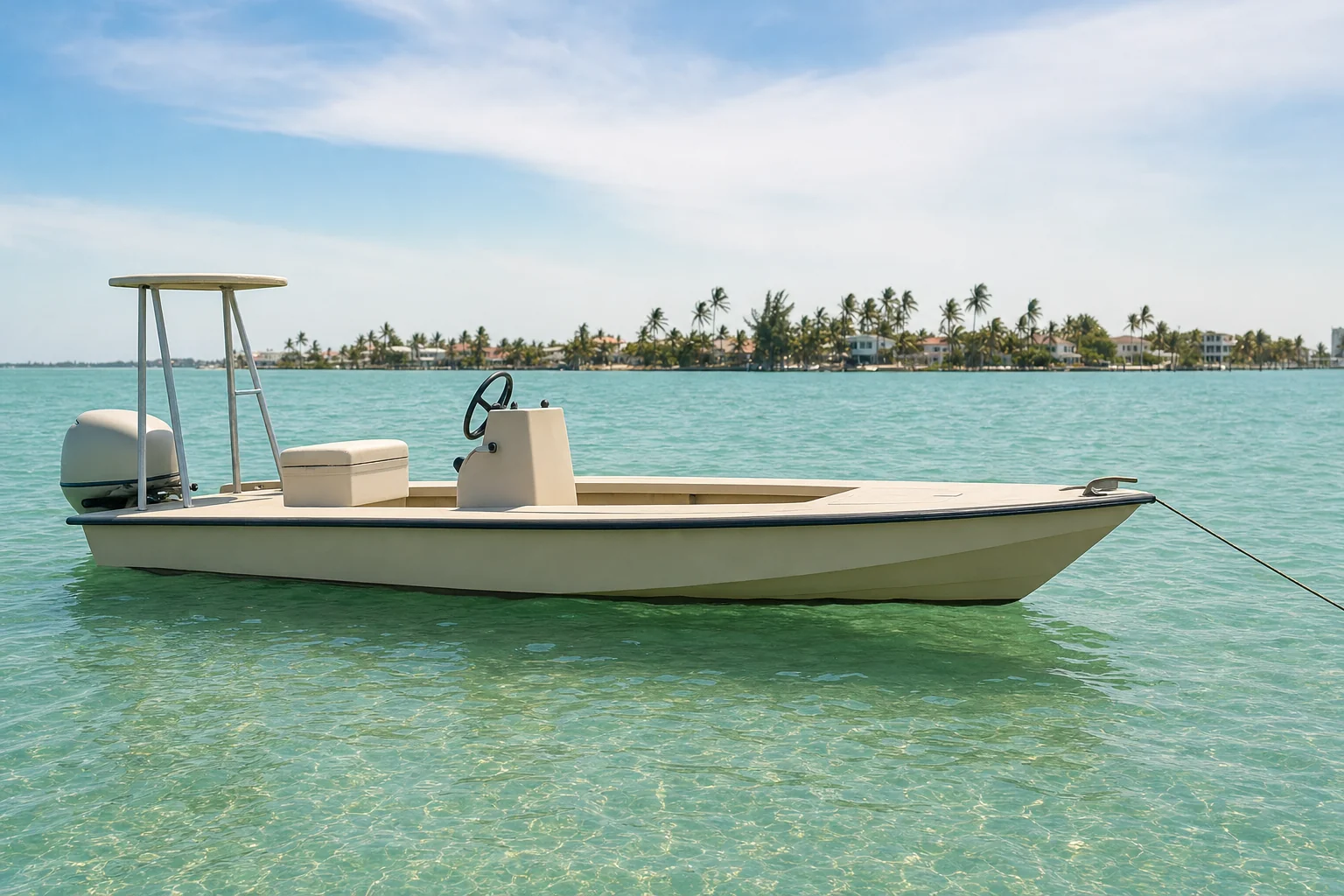
Mobile Service Means the Repair Comes to You
Trailering a boat with a compromised transom risks further damage and puts stress on an already weakened structure. Because we operate as a fully mobile fiberglass repair service throughout Miami-Dade, we bring the tools, materials, and expertise directly to your slip, storage yard, or driveway. There is no haul-out fee, no waiting in a boatyard queue, and no leaving your boat unattended at a shop across town. Most transom repairs are completed in one to three days on-site depending on the extent of the damage, and we keep you updated at every stage so you know exactly when you can get back on Biscayne Bay.
Related Guides
Previous: hull repair
Frequently Asked Questions
How do I know if my transom needs a full replacement or just a partial repair?
The deciding factor is how far the moisture has spread and whether the outer fiberglass skin is still bonded to the core. A moisture meter reading above roughly 20 percent across most of the transom face, combined with widespread delamination, almost always means a full core replacement is the right call. Localized soft spots caught early can sometimes be addressed with epoxy injection, which we assess during the initial inspection.
Can you repair a transom while the boat is still in the water at my marina?
For most transom work the boat needs to be out of the water, because we have to grind, dry, and laminate the repair area and those processes require a dry, accessible surface. If your marina has a lift or you can arrange a dry-storage spot nearby, we can work there without you needing to trailer the boat anywhere. We will confirm the logistics when we schedule the job.
How long does a transom repair typically take?
A partial repair involving epoxy injection and re-sealing hardware can often be completed in a single day. A full core replacement with new laminate and gelcoat finish typically takes two to three days on-site, partly because epoxy cure times cannot be rushed in the interest of long-term strength. We will give you a specific timeline after the initial assessment.
What material do you use for the new transom core?
We most commonly use marine-grade plywood that is sealed on all six sides with epoxy before installation, which is the same approach used by most quality production builders. For customers who want a rot-proof alternative, we also work with high-density composite board that will never absorb water regardless of future sealant failure. We can walk you through the trade-offs in cost and weight for your specific boat.
Will the repaired transom be strong enough to hold my engine?
Yes — when done correctly a transom repair produces a mounting surface that meets or exceeds the original specification. We rebuild the core to the factory thickness, use structural epoxy laminates that are stronger than the original polyester layup, and torque the engine bolts to spec with properly bedded hardware. We would not hand the boat back to you if we had any doubt about the integrity of the motor mount.
Does transom repair fall under fiberglass boat repair, or is it a separate service?
Transom repair is a core part of fiberglass boat repair because the transom itself is a fiberglass sandwich structure — the same materials and laminating techniques apply. You can learn more about the full range of structural and cosmetic fiberglass work we handle on our fiberglass boat repair page at /fiberglass-boat-repair/.