
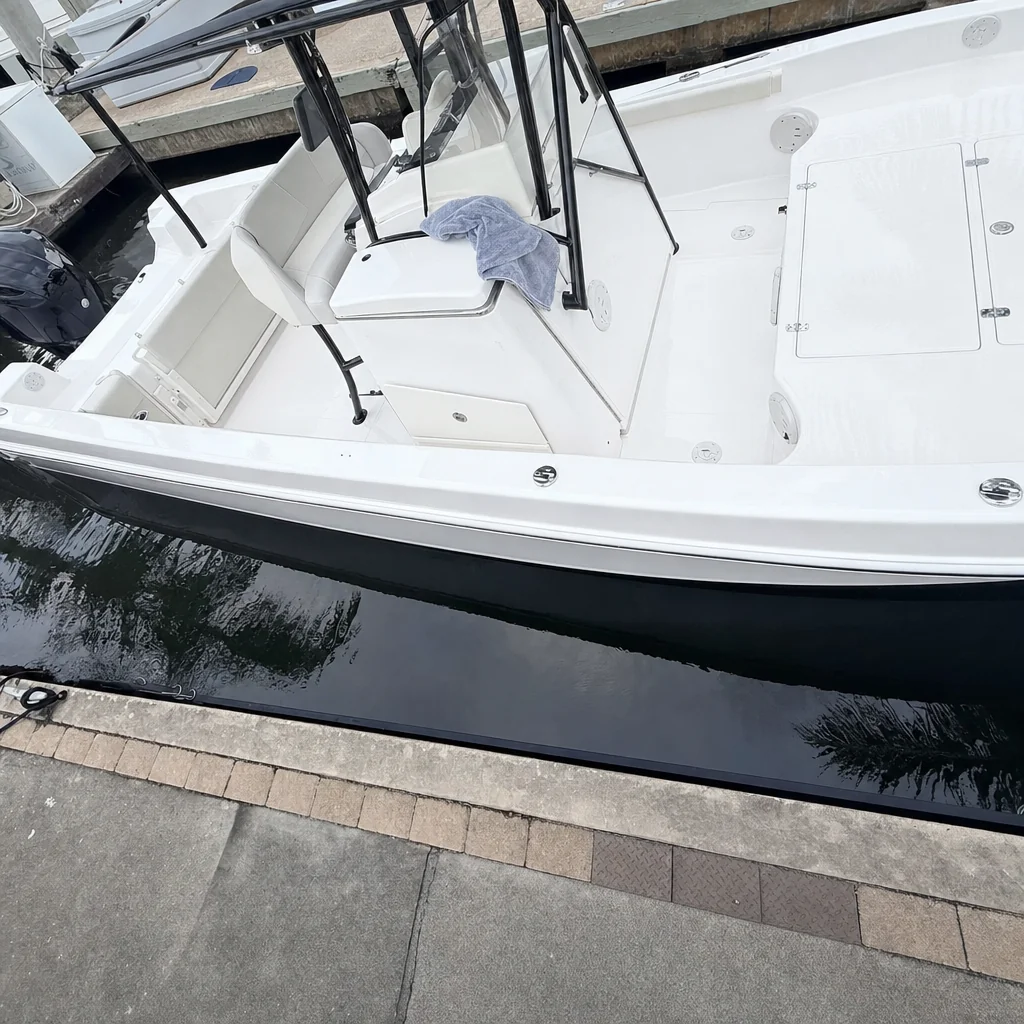
Boat Seat Repair Miami, FL
Boat seat repair in Miami, FL restores cracked, faded, torn, or waterlogged seating so your vessel looks sharp and stays comfortable on the water. A mobile technician comes to your dock, marina, or driveway, which means no hauling the boat and no waiting weeks at a shop. Most seat repairs are completed the same day, using marine-grade materials built to handle South Florida's heat, humidity, and UV exposure. Learn more about Boat Upholstery Repair.

Why Miami's Climate Is Hard on Boat Seats
South Florida delivers more sun hours per year than almost anywhere else in the country, and that constant UV bombardment breaks down vinyl faster than owners expect. Salt air accelerates stitching rot and causes foam cores to absorb moisture, leaving seats that feel spongy or smell musty. Add the daily temperature swings between air-conditioned storage and open-water heat, and even quality OEM upholstery can crack or delaminate within a few seasons. Catching the damage early — a small tear, a single popped seam — is almost always cheaper than waiting until the entire seat needs replacement.
What Boat Seat Repair Actually Covers
Seat repair is not one single service — it covers a range of problems that vary in complexity and cost. A technician will assess the vinyl surface, the underlying foam, the base structure, and the stitching before recommending a repair path. Surface-level cracks and small tears can often be patched or heat-welded invisibly. Larger damage, or seats where the foam has completely broken down, typically calls for a full re-cover using new marine vinyl cut and sewn to match the original profile.
Structural issues matter too. Hinges, pedestals, and mounting hardware corrode in saltwater environments, and a seat that wobbles or won't lock in position is a safety concern, not just a cosmetic one. A thorough repair visit addresses the whole seat, not just the part you can see.
- Vinyl crack and tear patching
- Full re-covering with marine-grade vinyl
- Foam core replacement for sunken or waterlogged cushions
- Seam and stitching repair using UV-resistant thread
- Hinge, snap, and mounting hardware replacement
- Color matching to existing upholstery
Signs Your Boat Seats Need Attention Now
Any one of these signs means repair is overdue — waiting usually turns a simple fix into a costlier job.
Visible Cracks or Splits:
Surface cracks let water reach the foam core. Once moisture gets in, mold and structural breakdown follow quickly in Miami's humidity.
Torn or Fraying Seams:
Open seams expose raw foam edges to UV and salt. A re-stitch now prevents a full re-cover later.
Sunken or Spongy Cushions:
Foam that no longer springs back has absorbed water or simply broken down. It will not recover on its own and should be replaced.
Fading or Chalky Vinyl:
Heavy UV fade weakens the vinyl at a molecular level, making it brittle and prone to cracking under normal use.
Mold or Mildew Odor:
A persistent musty smell means moisture is trapped inside the cushion. Cleaning the surface alone will not solve it.
Loose or Broken Hardware:
Wobbly seat bases and corroded hinges are safety hazards. Hardware replacement is a quick fix when caught before the mount point fails entirely.

Mobile Repair vs. Dropping the Boat at a Shop
Trailering a boat across Miami just to have seats repaired costs time, fuel, and often a hefty shop drop-off fee before any work begins. A mobile boat seat repair service eliminates all of that — the technician arrives with the tools, vinyl stock, foam, and hardware needed to complete most jobs on-site. Work gets done at your marina slip, storage yard, or home, and you can inspect the finished result before the technician leaves. For boat owners in Miami-Dade and Broward counties, mobile service is simply the more practical option for anything short of a full interior rebuild.
Related Guides
Previous: bimini top repair
Frequently Asked Questions
How long does a typical boat seat repair take?
Most single-seat repairs — patching, re-covering, or foam replacement — take one to three hours on-site. A full set of cockpit seating may take a full day. The technician will give you a time estimate after inspecting the seats.
Can you match the color and texture of my existing vinyl?
In most cases, yes. Mobile technicians carry a range of marine vinyl stock and can order specific colors or textures when an exact match is needed. Bring photos or the boat's make and model year when you call for the best chance of a seamless result.
Is it worth repairing old seats or should I just replace them?
Repair makes sense when the base structure is sound and the damage is limited to the vinyl surface or foam. Full replacement becomes more cost-effective when the seat frame is corroded, the damage covers most of the surface, or the seat is a non-standard shape that requires custom fabrication.
What type of vinyl is used for repairs in South Florida?
Quality marine vinyl rated for UV resistance and mildew inhibition is the standard for any repair in this climate. Look for material with a warranty of at least five years and a weight of 28 to 32 ounces per linear yard for high-traffic seating areas.
How does boat seat repair relate to full upholstery service?
Seat repair is one part of a broader boat upholstery repair service that can also cover helm cushions, berth cushions, bolsters, and interior panels. If your seats need work, it is a good time to have the rest of the upholstery inspected as well. You can learn more on our boat upholstery repair page at /boat-upholstery-repair/.
How do I prevent my boat seats from cracking again after repair?
Apply a UV-protectant vinyl conditioner every four to six weeks, use fitted seat covers when the boat is stored, and rinse seats with fresh water after every saltwater outing. These three habits can double the lifespan of even standard marine vinyl in Miami's conditions.