
Gelcoat Repair Miami, FL
Gelcoat repair restores the hard outer shell of your fiberglass hull, stopping water intrusion and bringing back the original gloss before small cracks turn into costly structural damage. Miami's intense sun, saltwater, and constant UV exposure accelerate gelcoat breakdown faster than almost anywhere else in the country, so early attention matters. Our mobile technicians come to your marina, yard, or driveway and handle everything from hairline stress cracks to deep gouges without you ever trailering the boat. Learn more about Fiberglass Boat Repair.
What Gelcoat Damage Actually Looks Like
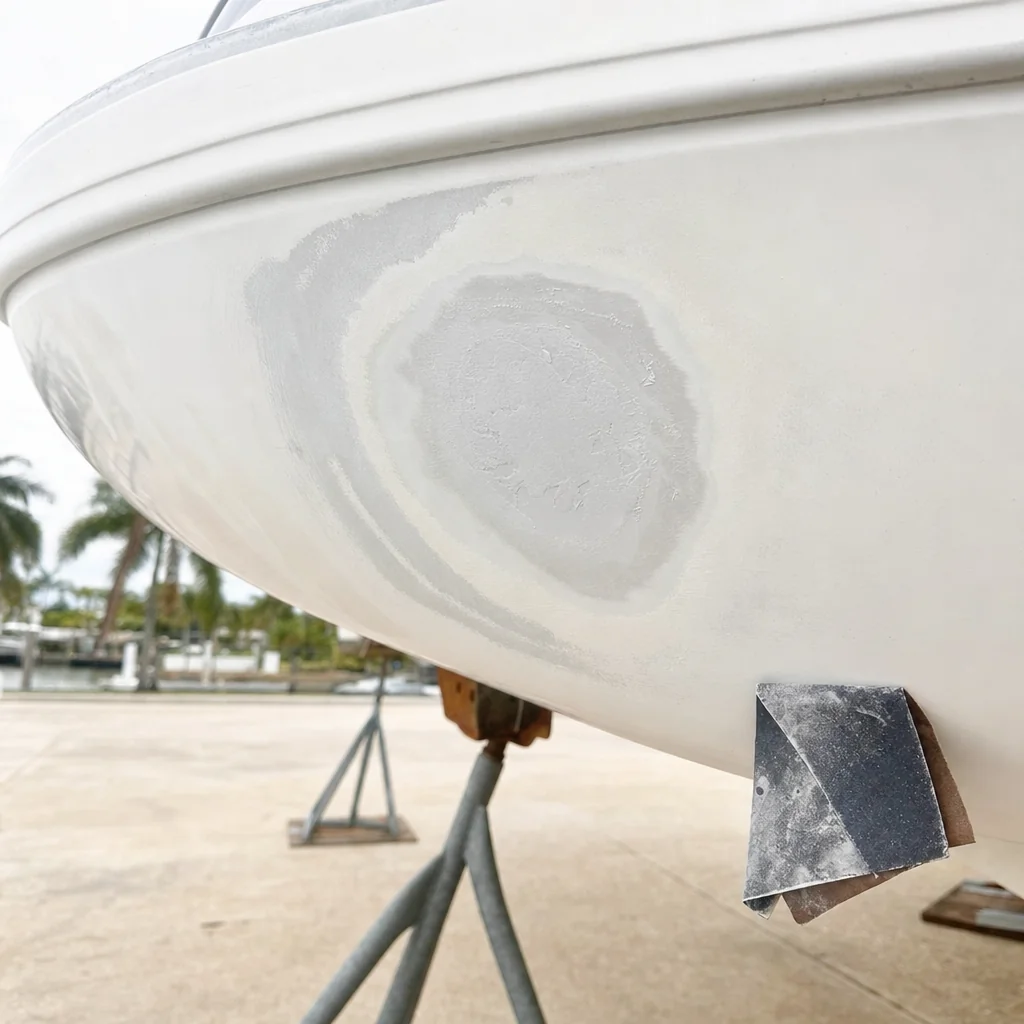
Gelcoat is the pigmented resin layer that gives a fiberglass boat its color, shine, and first line of defense against water. When it fails, you typically see spider cracks radiating from high-stress points like cleats or hatches, chalky oxidation that no amount of waxing will fix, deep scratches that expose the raw laminate beneath, or impact chips along the waterline and transom. Left alone in Miami's climate, moisture works into the laminate and causes osmotic blistering, which is a far more expensive repair than addressing the gelcoat early. Catching damage at the surface stage keeps the fix straightforward and affordable.
How the Repair Process Works
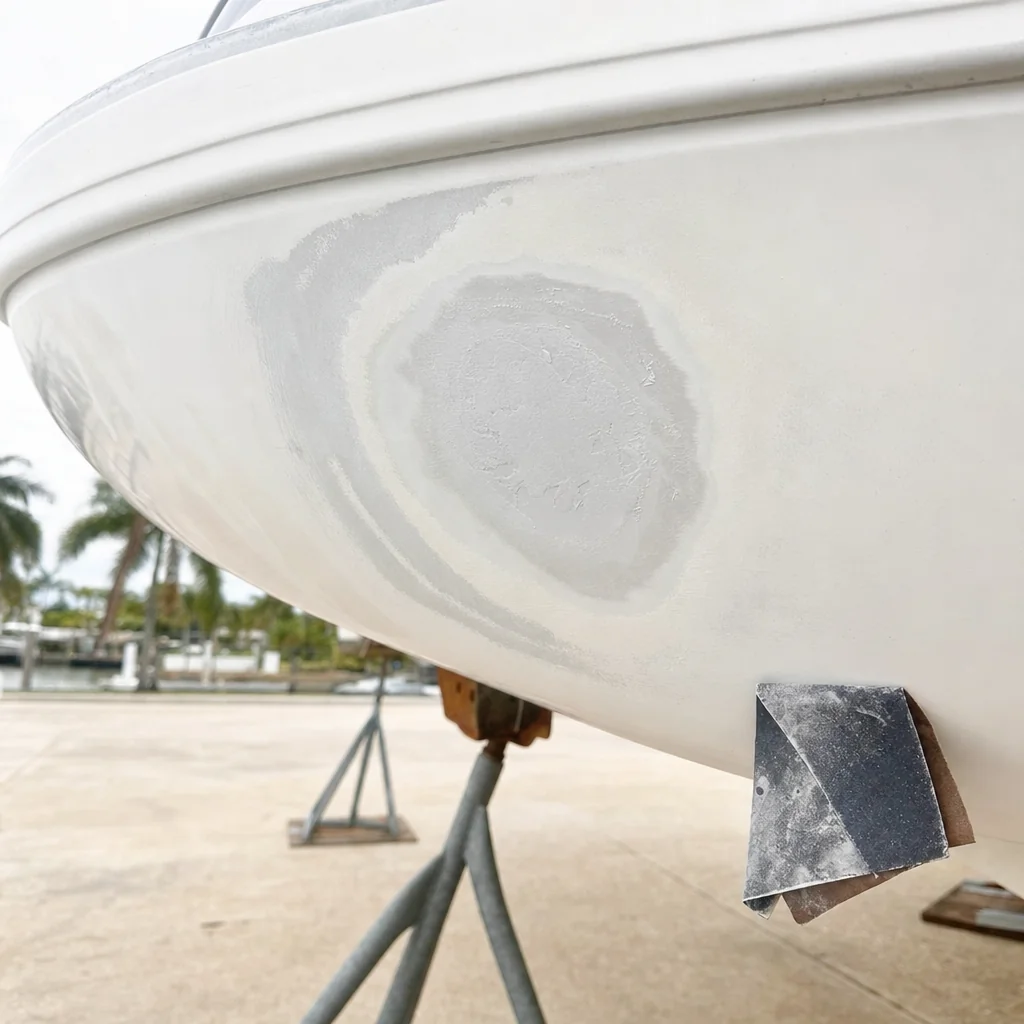
A proper gelcoat repair starts with cleaning and degreasing the damaged area so nothing interferes with adhesion. The technician then grinds or sands back to sound material, removing any contaminated or delaminated gelcoat completely. For cracks, the edges are opened slightly with a rotary tool so the new material has enough surface area to bond. Filler gelcoat is mixed to match your hull color, applied in thin layers, and allowed to cure before being block-sanded progressively through finer grits.
The final stage is compounding and polishing to blend the repaired spot seamlessly with the surrounding surface. On a well-matched repair, the patch becomes virtually invisible. Color matching is the most skilled part of the job because gelcoat fades over time and the mix must account for the existing oxidation level of the surrounding hull. Experienced technicians often apply a slight tint offset so the repair looks right after it weathers in, not just on the day it is done.
- Clean and degrease the repair zone
- Grind back to sound, uncontaminated gelcoat
- Open cracks to create a proper bonding surface
- Apply color-matched gelcoat in thin, cured layers
- Block-sand through progressive grits
- Compound and polish to a seamless finish
Signs Your Boat Needs Gelcoat Repair Now
Any one of these conditions is worth addressing before the next time the boat goes in the water.
Spider Cracks:
Fine radiating cracks around fittings or high-flex areas signal stress in the laminate below. They allow water in and worsen with every wave impact.
Deep Scratches:
Scratches that expose white or gray fiberglass beneath the color layer have broken through the protective barrier and need to be filled and sealed.
Oxidation and Chalking:
A dull, chalky surface means the resin has degraded from UV exposure. Polishing alone will not restore it once the oxidation goes deep enough.
Impact Chips:
Dock strikes, trailer rollers, and debris hits leave chips that collect dirt and moisture. Small chips are quick repairs; ignored chips become delamination.
Waterline Staining and Pitting:
Persistent stains that sit in micro-pits indicate surface porosity. The gelcoat has lost its density and needs to be cut back and refinished.
Osmotic Blisters:
Bubbles under the gelcoat mean water has already reached the laminate. This requires opening, drying, and resealing before the gelcoat layer is restored.
Why Mobile Repair Makes Sense in Miami
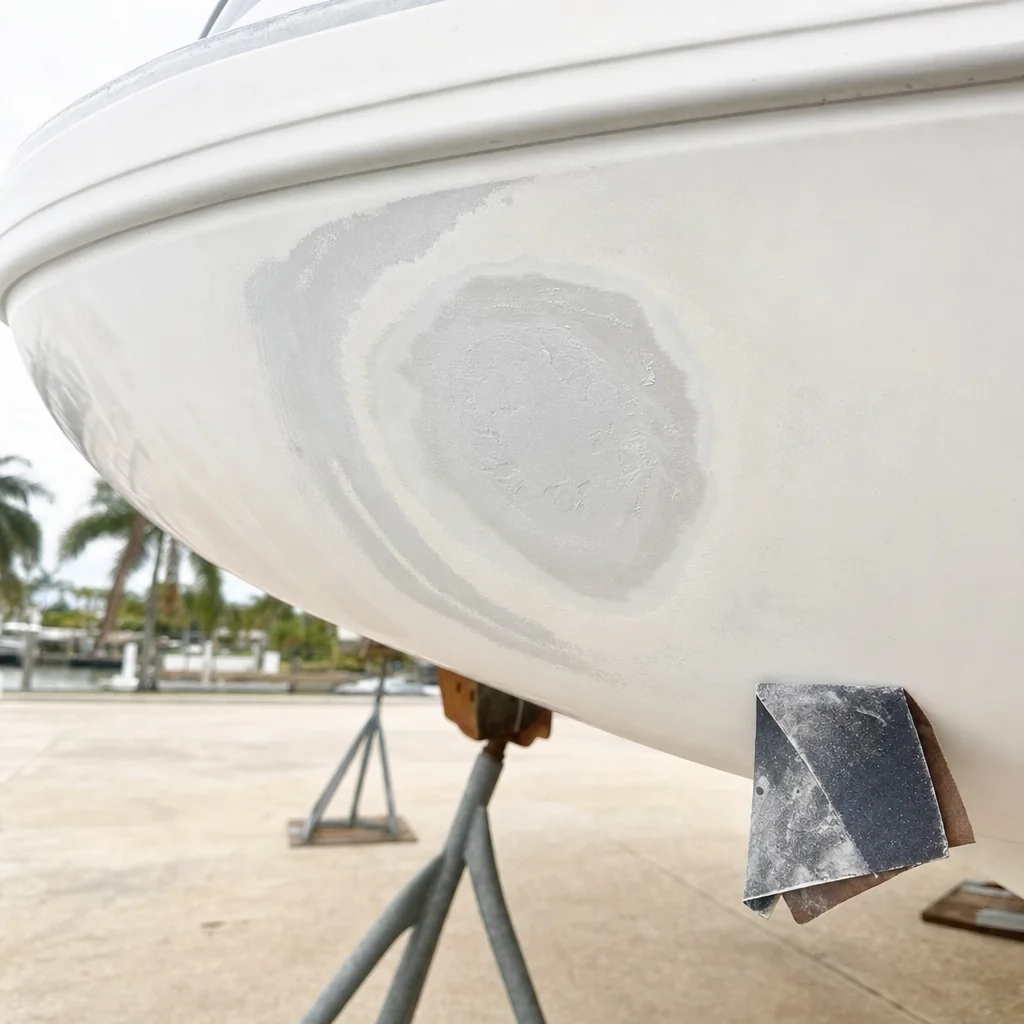
Trailering a boat across Miami traffic to a fixed shop adds time, fuel, and risk of additional scratches in transit. A mobile technician brings all the tools, gelcoat materials, and polishing equipment directly to wherever the boat sits, whether that is a slip at Dinner Key, a dry-stack facility in Coconut Grove, or your own driveway in Kendall. Work is done in the shade of the boat itself or under a portable canopy, which actually produces better gelcoat cure conditions than an open yard in direct midday sun. For full fiberglass boat repair needs beyond the gelcoat surface, our team handles structural work as well — visit our fiberglass boat repair page to see the full scope of services available.
Related Guides
Next: hull repair
Frequently Asked Questions
How long does a gelcoat repair take to cure before the boat can go back in the water?
Most gelcoat repairs are fully cured and water-ready within 24 to 48 hours after the final polish, depending on temperature and humidity. Miami's warm climate actually speeds curing compared to cooler regions. Your technician will give you a specific timeline based on the size and depth of the repair.
Can gelcoat be matched perfectly on an older boat?
A close match is almost always achievable, but a perfect invisible match on a boat that is several years old is difficult because the original gelcoat has faded and oxidized. Skilled technicians mix a slightly adjusted color and feather the edges of the repair to minimize any visible difference. On heavily faded hulls, a full compound and polish of the surrounding area after the repair brings everything closer together.
Is there a difference between gelcoat repair and painting the hull?
Yes. Gelcoat is a pigmented resin that bonds chemically to the fiberglass laminate and is the original factory finish on most production boats. Paint sits on top as a coating and requires different prep and maintenance. Gelcoat repairs preserve the original finish system and are generally preferred for spot repairs, while paint is sometimes used for full hull refinishing when the gelcoat is too far gone to restore.
What causes spider cracks and will they come back after repair?
Spider cracks are usually caused by impact stress, flex in the hull around stiff fittings, or improper support on a trailer. Repairing the gelcoat removes the existing cracks, but if the underlying cause is not addressed, new cracks can form in the same area over time. A good technician will note whether the cracking pattern suggests a structural issue that should be evaluated before the cosmetic repair is done.
How much does gelcoat repair typically cost?
Cost depends on the size of the damaged area, the depth of the repair, and how complex the color match is. Small chips or a short scratch can be a modest flat-rate job, while a large section of cracking or blistering along the waterline is priced by the linear or square foot. The best approach is to have a technician assess the damage in person so you get an accurate quote rather than a rough estimate.
Can I do gelcoat repair myself or should I hire a professional?
DIY gelcoat kits are available, but achieving a smooth, color-matched, polished result without experience is genuinely difficult. Common DIY problems include poor color matching, visible sanding scratches, and repairs that look fine initially but lift or discolor within a season. For anything larger than a very small chip in an inconspicuous spot, professional repair saves time and usually costs less than correcting a failed DIY attempt.